Lose fat without giving up carbs.
Carb fasting alternates near-zero-carb days with normal days. Your body relearns to burn fat, and you keep the foods you love. Most people start with three fast days a week.
Free. Published by Freedomology.
A typical week. Filled days are fast days, near zero carbs. The rest are normal days, carbs as usual.
Definition
Carb fasting (noun) a metabolic protocol that alternates near-zero-carb days with normal-carb days to rebuild metabolic flexibility — so your body burns fat without you giving up carbs. More terms
Two kinds of day. That is the whole plan.
On a fast day you eat protein, fat, and vegetables and keep carbs near zero. On a normal day you eat carbs as usual, about 80 percent whole food. There are no macros to count and nothing to weigh.
- A little to lose
- Skip carbs for one meal a day
- Steady fat loss
- Three fast days a week, not back to back (Monday, Wednesday, Friday)
- More to lose and committed
- Four to five weekday fast days, carbs on the weekend

| Aspect | Fast day | Normal day |
|---|---|---|
| Carbs | Near zero | As usual |
| What you eat | Protein, fat, non-starchy vegetables | Balanced meals, carbs included |
| What happens | Glucose runs short, so your body burns stored fat | Energy refills and your body learns food is not scarce |
| Example foods | Eggs, steak, salmon, chicken, leafy greens, olive oil | All of that, plus rice, fruit, bread, and the foods you love |
Why fast days work: the switch
Your body prefers glucose from carbohydrate. Take it away for a day or two and it turns to the fuel it always has on hand: stored fat. Do that a few times a week and the switch gets faster.
Deplete. With carbs near zero, your body works through its stored glucose (glycogen) as the day goes on.
Switch. As glucose runs short, the liver burns more fat and starts making ketones. Most people feel this on their first few fast days.
Adapt. Each fast day makes the switch quicker and smoother. People call this being fat-adapted.
A schematic, not a measurement. The studies behind it are on the science page.
Start with your situation.
If you have
- Prediabetes Your A1c is creeping up and you want to move it before it becomes a prescription.
- Type 2 diabetes You manage diabetes and want to know what changes, and what to check with your clinician first.
- Weight loss You want to lose fat on a plan you will still be following in six months.
- Women You want the version that accounts for cycles, hormones, and menopause.
- Metabolic syndrome Waist, blood pressure, triglycerides: you want the numbers to move together.
If you are coming from
- keto Keto keeps carbs out for good. Carb fasting removes them on fast days only.
- intermittent fasting Intermittent fasting limits when you eat. Carb fasting limits what you eat on set days.
- GLP-1 drugs Ozempic and Wegovy suppress appetite while you take them. Carb fasting trains a habit you keep.
- a low-carb diet Low carb is low every day. Carb fasting concentrates the restriction into fast days.
- carb cycling Carb cycling tracks macros around training. Carb fasting has two day types and nothing to weigh.

The person behind the plan
"I love carbs, and I hate the idea of giving up the foods I love."
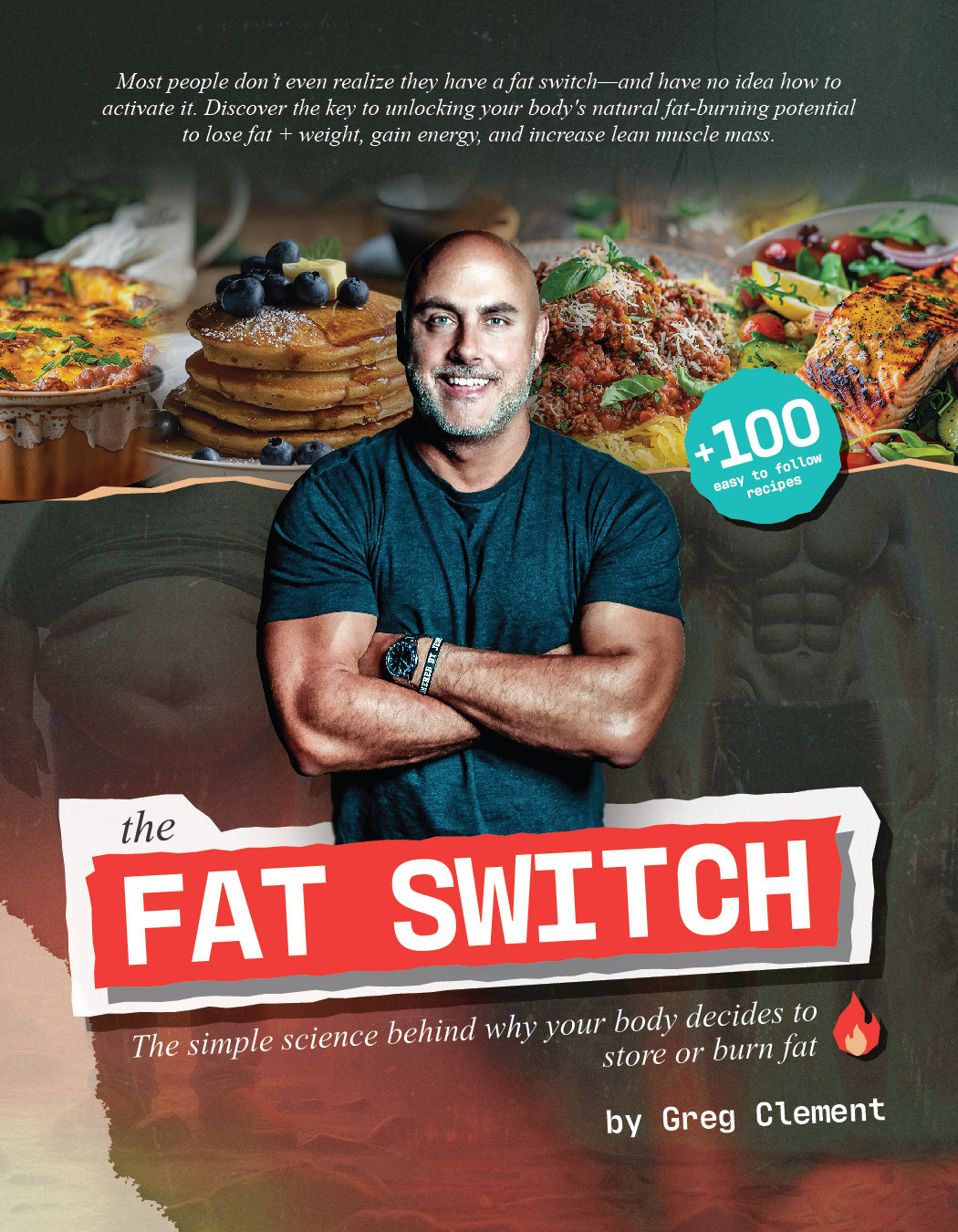
Greg Clement wrote The Fat Switch and ran carb fasting on himself for a year, tracked with a continuous glucose monitor. He lost 21 pounds that year. One person, one result, not a promise. See the data.
- 15 studies
- Every study the site leans on is listed with its DOI or PMID, with the design and the limitations spelled out. The evidence page.
- Who should not
- Some people should not do this, or should only do it with their clinician. That page comes before the plan, not after it. Read it first.
The free book
Get The Fat Switch, free
The Fat Switch by Greg Clement is the whole plan in one place. Enter your email and we send it over.
- The two-day plan and how to choose your week
- Why your body stores or burns fat, in plain words
- The whole-food swap list and the 80/20 rule for normal days
- 100 recipes, including fast-day meals you will want to eat
Guides people start with
All 45 pages-
Guides · 1 min
What to eat on a carb fasting fast day
A practical food list for fast days, including protein, healthy fats, non-starchy vegetables, foods to limit, and foods to skip.
-
Guides · 1 min
Quit keto? Try this instead
Quit keto? Carb fasting pairs near-zero-carb fast days with normal-carb days, so you can keep carbs in your life.
-
Compare · 1 min
Carb fasting vs. GLP-1 drugs (Ozempic & Wegovy)
How GLP-1 drugs like Ozempic and Wegovy compare with carb fasting, including weight regain after treatment and "natural Ozempic" claims.
-
Who it's for · 1 min
Carb fasting for prediabetes
What prediabetes is, how lower-carb eating may improve glycemia, and why carb fasting can be one way to act early.
-
Guides · 2 min
How to become fat-adapted
What "fat-adapted" means and how repeated carb fast days rebuild metabolic flexibility over days to weeks on your own timeline.
-
Safety · 2 min
Carb fasting and your medications
Carb fasting can lower blood sugar fast. If you take insulin, sulfonylureas, or SGLT2 inhibitors, your medication plan may need to change.
Questions people ask
- Is carb fasting the same as keto?
- No. Keto keeps carbs very low every day so you stay in ketosis. Carb fasting removes carbs on scheduled fast days and puts them back on normal days. You visit ketosis; you do not live in it.
- How many fast days a week?
- It depends on how much you want to lose. Skip carbs for one meal a day if you have little to lose. Three fast days a week, not back to back, is the usual start for steady fat loss. Four to five weekday fast days with carbs on the weekend is for people with more to lose.
- What do I eat on a fast day?
- Protein, fat, and non-starchy vegetables: eggs, meat, fish, olive oil, leafy greens. The aim is near-zero carbohydrate, not less food. You should finish a fast day satisfied.
More questions, answered page by page, on the questions page. Every term in one place in the glossary.